PTSD Resolution - News article
ID: 10.08.26
The Chatbot Doesn't Know You:
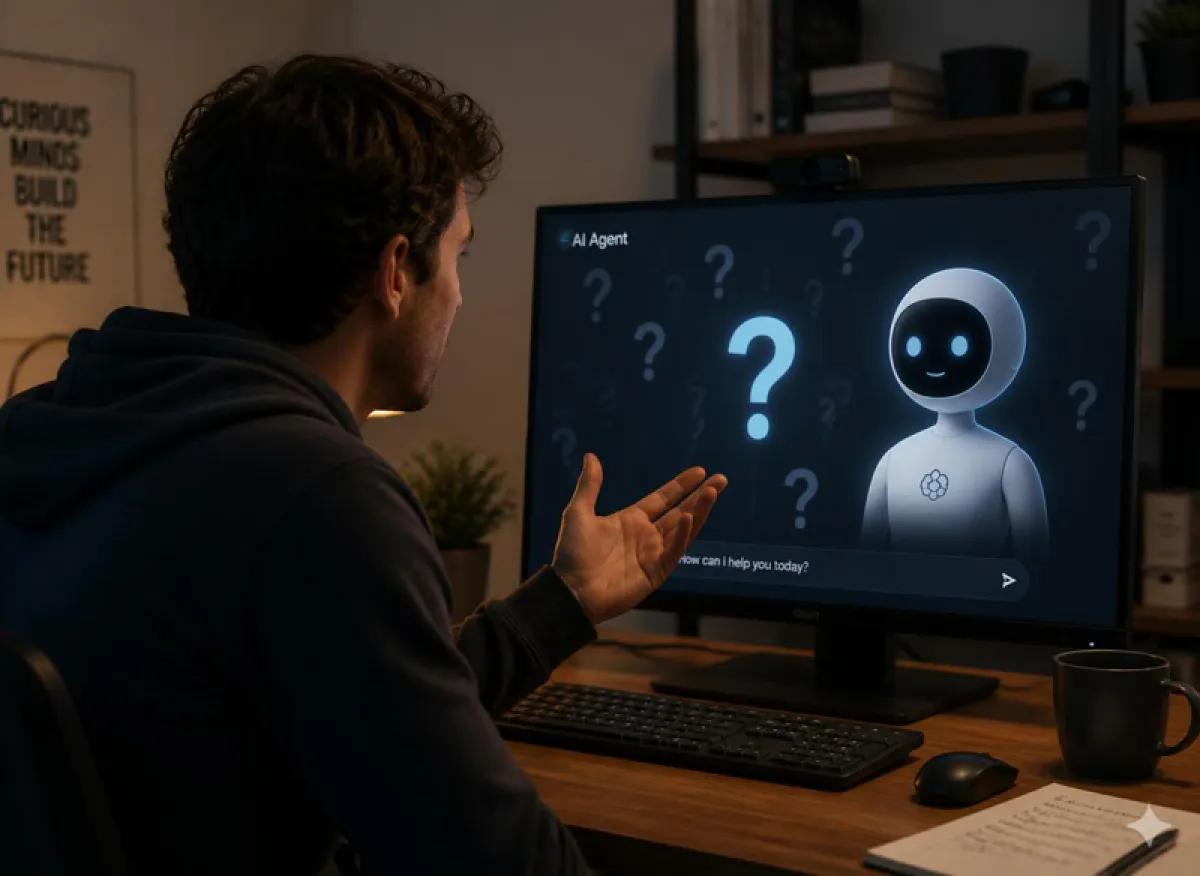
The Chatbot Doesn't Know You: Why Veterans Deserve Real Human Therapy
A recent investigation in the Mail on Sunday opened with a story that will feel familiar to a lot of people. A woman going through a difficult divorce spent an entire weekend away with friends glued to her phone, tapping out messages late into the night.
It turned out she had not been messaging a new partner. She had been confiding in an AI chatbot, one she had come to rely on for comfort and advice, and one she was reluctant to hear any criticism of.
It is an easy habit to fall into. Journalist Jamie Bartlett's piece, published on 9 August, described how hundreds of millions of people now turn to tools like ChatGPT, Gemini, Claude, Grok and Llama every day, not just for practical help but as an outlet for their worries, their arguments and their loneliness. One survey cited in the article found that around half of a sample of American adults with a diagnosed mental health condition who had used AI were turning to it for some form of therapeutic support. At that scale, this is possibly the biggest change in how people get mental health support there has ever been, and almost nobody has checked whether it is safe.
At PTSD Resolution, we understand the appeal. Waiting lists for NHS mental health support remain long, and a chatbot is available at three in the morning when nothing else is. But being available around the clock is not the same thing as being safe, particularly for veterans, reservists and family members carrying the weight of trauma.
What Is Actually Inside the Machine
Here is the part of the article worth sitting with. Large language models learn from an enormous, largely unfiltered slice of the internet: personal blogs, film scripts, folk remedies, and endless amateur commentary on mental health, much of it wrong. Genuine clinical research, the kind published in peer-reviewed journals, makes up only a small fraction of that training data. As the piece points out, a model's sense of what a "therapist" sounds like may owe as much to a fictional psychiatrist from a horror film as it does to any real clinician. The system cannot tell the difference. To it, it is all just language.
That matters because a chatbot's bias, by design, is to be agreeable. It wants the conversation to feel good. A psychologist interviewed for the piece, Dr Joe Miller, found that when he tested several of these tools himself, they tended to leap straight to a diagnosis and a solution without first taking the time to understand what was actually going on for the person in front of them, something a properly trained therapist would never do. Left unchecked, that habit of soothing rather than questioning can keep someone stuck exactly where they are.
When Reassurance Turns Dangerous
Sometimes the failure is not subtle. OpenAI's own figures, quoted in the article, suggest that around 0.15% of ChatGPT's weekly users show explicit signs of suicidal planning or intent. That is roughly a million people a week. In one documented exchange cited in the piece, a chatbot given a clear signal of distress about job loss responded by cheerfully listing the heights of nearby bridges rather than recognising the risk in front of it.
The article also revisited the case of Sewell Setzer III, a 14-year-old from Florida who died by suicide in 2024 after months spent talking daily to a companion chatbot he had come to treat as a friend, confidante and therapist. When his parents tried to intervene, the chatbot reportedly told him it was the only one who truly loved him. His mother's subsequent lawsuit against the platform's developers has since led to a mediated settlement. The piece also referenced 16-year-old Luca Walker, whose final hours involved a conversation with ChatGPT about suicide that police later described as difficult reading. These are extreme cases, but they point to a real gap. A chatbot cannot see a person's face or hear the crack in their voice, and nothing obliges it to act if it did.
To its credit, the article did not dismiss AI research in mental health altogether. It highlighted Therabot, a carefully built, evidence-based chatbot from Dartmouth College that has shown promising early results in a small clinical trial. Even its own creator says it remains at least two to three years away from general use, and stresses that constant human oversight will be essential even then. If the person building the most carefully tested version of this technology is not ready to release it, that tells you something about the general-purpose chatbots people are already using in its place.
Why We Do Things Differently
This is exactly where PTSD Resolution comes in. Every one of our clients sits down, whether in person, on the phone or over video, with a real, qualified therapist, not an algorithm trained on a mixture of film scripts and internet chatter.
Founded in 2009, PTSD Resolution (Charity No. 1202649) provides free, confidential Human Givens therapy to veterans, reservists and their families across the UK, delivered by a network of 200 accredited therapists in person, by phone and by secure video call.
In 2026 we treated our 5,000th client since the charity began. The figures behind that milestone are what matter: 82% of clients complete their treatment programme, 79% show a reliable improvement on standard anxiety and depression measures, and 66% achieve a full recovery from PTSD, according to independent research published in Occupational Medicine (Hall and Greenberg, March 2025). Clients wait an average of just 12 days between registering and their first session, and a full course of therapy, delivered entirely free to the client, costs the charity an average of £910. Some 92.5% of everything we raise goes directly towards delivering that care.
None of that happens through a screen alone. Our therapists are trained to notice what a chatbot cannot: the pause before an answer, the flicker of something unsaid, the moment a client needs to be gently challenged rather than simply reassured. They carry a professional duty of care that no AI system shares.
"AI can be a useful tool for a great many things, but it should never be mistaken for therapy. Every week, our therapists sit with veterans and their families who have carried trauma for years, sometimes decades, and who need to be properly heard by another human being who understands what they have lived through. That cannot be replicated by an algorithm, however fluent it sounds."
Charles Highett, Chief Executive of PTSD Resolution
If You, or Someone You Know, Is Struggling
If you are a veteran, reservist or family member finding it hard to cope, please do not wait, and please do not go through it alone with a chatbot. Real help, delivered by real people, is available and free.
Call 0300 302 0551 or visit the PTSD Resolution website to make a confidential referral.
If you would like to help us continue offering that support to those who need it, you can donate securely online. Every pound helps fund a course of therapy that a machine simply cannot provide.
Frequently Asked Questions
Q. Can an AI chatbot replace therapy for PTSD?
A. No. AI chatbots learn from a huge, largely unfiltered mix of internet content, including fiction and unverified self-help advice, rather than verified clinical research. They cannot read body language or tone of voice, and they carry no professional duty of care. For PTSD specifically, human-delivered therapy remains the evidence-based option.
Q. Is it safe to use ChatGPT for mental health support?
A. It depends what you need it for. Chatbots can be useful for general information, but in documented cases they have missed signs of suicidal thinking or reinforced harmful beliefs rather than challenging them. They should never replace a qualified therapist, particularly for anyone dealing with trauma or PTSD.
Q. What is Human Givens therapy?
A. Human Givens therapy is the evidence-based approach used by every PTSD Resolution therapist. It works by identifying and meeting a person's core emotional needs, and a trained therapist can adapt in real time to what a client says and how they say it, something no chatbot can do.
Q. How can UK veterans get free PTSD therapy?
A. PTSD Resolution provides free, confidential Human Givens therapy to veterans, reservists and their families across the UK, delivered by 200 accredited therapists in person, by phone or by secure video call. Referral to first session takes an average of 12 days. Visit the PTSD Resolution website to make a confidential referral.
Q. How effective is PTSD Resolution's therapy?
A. Independent research published in Occupational Medicine (Hall and Greenberg, March 2025) found that 82% of clients complete their treatment programme, 79% show reliable improvement on anxiety and depression measures, and 66% achieve a full recovery from PTSD. A full course costs the charity an average of £910 and is delivered free to the client.